17 Years Toronto PlumbingCSA B64.10 CertifiedWSIB & $2M CGL
Exterior Backwater Valve Installation in Toronto, ON | Licensed, Permitted & Rebate-Ready
· By The Backwater Valve Toronto Crew
Backwater Valve Installation Toronto installs exterior backwater valves at the property line when the basement floor can't be cut or the sewer lateral runs deep. A licensed plumber pulls the City of Toronto drain permit, calls in utility locates, opens a shored trench, and sets a valve with a deep-burial riser below the frost line. We backflow-test it with the trench open, compact the clay backfill in lifts, and restore your sod or interlock. Then we file the Toronto Basement Flooding Protection Subsidy so up to $1,250 comes back to you. Seventeen years of Toronto digs taught us where the clay fights back.
Exterior installs run $2,500-$4,500 per install before the rebate. We spec Mainline Backwater Valves, Mustee or Zurn models, with normally-open flapper or dual-flapper configurations depending on sewer lateral depth and risk tolerance. Every install includes drain permit coordination, backflow test certification, City inspection booking, and rebate paperwork across North York, Scarborough, Etobicoke, Toronto East, Toronto West and the rest of the GTA. Written 2-year workmanship warranty, WSIB coverage, $2M CGL.
$1,250Rebate
Up to $1,250 Back on an Exterior Install
Same subsidy as an interior valve. We file the paperwork after the City inspection.
The crew will call you shortly to book your free assessment.
17 Years of Toronto Backwater Valve Experience
Backflow Certified to CSA B64.10
WSIB Registered, $2M CGL
2,400+ Installs Completed
Engineering Specifications
Exterior Backwater Valve Installation Details
Five things decide whether an exterior install goes well: the dig, the weather, the clay, the frost line and the yard you get back.
Property Line Excavation
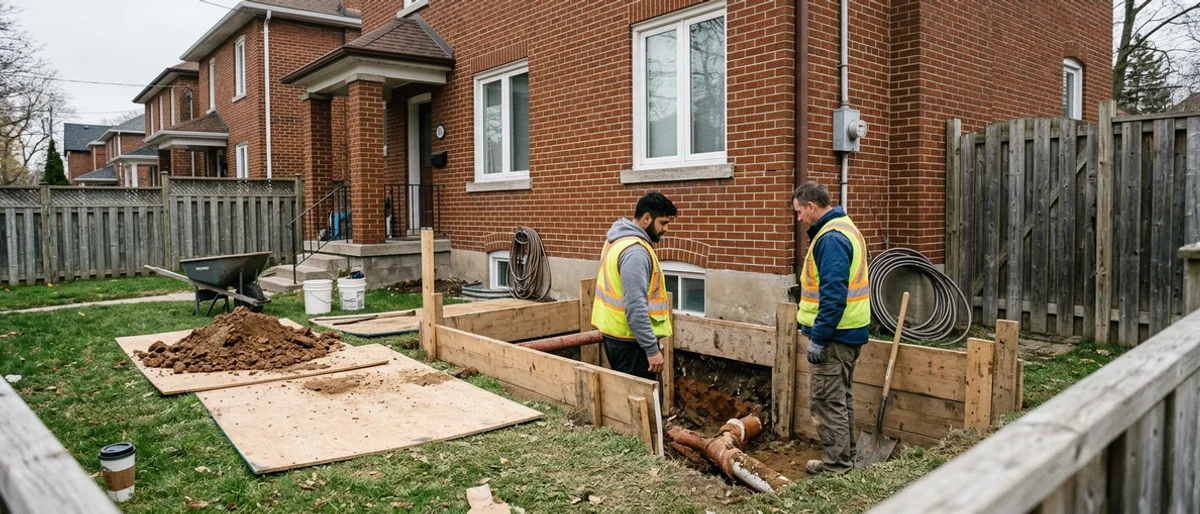
Property line excavation starts with an Ontario One Call locate for gas, hydro and cable, then a camera and sonde trace of your sewer lateral so we dig in the right spot. We open a narrow trench between the house and the curb stop, usually four to seven feet deep, and install aluminum shoring panels before anyone steps in. The lateral is exposed cleanly and cut back to sound pipe. We tie the valve in with SDR 35 PVC and Fernco couplings, or a proper cast iron transition on older homes. If the lateral crosses a municipal easement, the drain permit covers it and we flag it early. Excavated soil is staged on tarps to protect your lawn and driveway.
Weather and Winter Install Considerations
Weather and winter change exterior installs more than any other job we do. Frozen topsoil in a Toronto January can be a foot or more thick, so we either thaw it with ground heaters or break it mechanically, and both add time and cost. Freeze-thaw cycles also make trench walls less stable, which means more shoring. We'll still dig in winter for an urgent insurance deadline, but in our opinion an interior install is usually the better winter choice when the floor can be cut. Spring and fall are ideal for exterior work. Summer storms can flood an open trench, so we keep a pump on site and never leave a valve uncovered overnight.
Clay Soil and Leda Clay Backfill
Clay soil and Leda clay backfill are the reason some exterior installs sink a year later. Toronto blue clay and Leda clay hold water, swell and then settle as they dry, so simply shovelling the spoil back in leaves a dip in your lawn by spring. We bed the valve on HPB high performance bedding or 3/4-inch clear stone, wrap the pipe zone in granular material and backfill the rest in compacted lifts of about 30 centimetres with a plate compactor. Where the native clay is saturated, we haul it away and bring in clean fill. We come back after the first freeze-thaw season to check for settlement and top up at no charge if needed.
Freeze-Depth Compliance
Freeze-depth compliance protects the valve and the line from frost heave. In Southern Ontario the frost line sits around 1.2 to 1.8 metres, and the Ontario Plumbing Code expects drainage piping to be below it. Our exterior valves sit at or below that depth, and a deep-burial riser brings the access up to grade so you can still reach the flapper for annual checks. A grade collar locks the riser cap in place so a lawnmower or snow blower won't knock it loose. In exposed spots we add insulation board over the pipe run. The City inspector checks depth with the trench open, which is part of keeping your subsidy approval clean.
Landscape Restoration
Landscape restoration is part of every exterior quote, not an extra. Before digging, we photograph the yard and agree on what goes back: fresh sod, interlock pavers, a section of asphalt driveway or a garden bed. Interlock is lifted by hand, stacked and relaid on compacted base. Sod is cut fresh and rolled onto levelled topsoil. Asphalt patches are saw-cut square and hot-patched. What you'll see afterward is a small round access cap at grade and, after a few weeks of watering, a lawn that's hard to tell was ever opened. Restoration doesn't change your rebate eligibility. The City subsidy pays the same $1,250 whether the valve is inside or out.
4 Situations Where an Exterior Backwater Valve Beats an Interior Install
Most Toronto homes are best served by an interior backwater valve. These four are the exceptions.
Your basement is finished with flooring you can’t replace. Heated tile, wide-plank hardwood or a built-in home theatre can make a floor cut expensive to undo. Digging outside leaves the basement untouched.
The sewer lateral runs very deep. When the building drain sits far below the slab, an interior pit becomes a small well. A trench at the property line reaches the pipe at a more workable depth.
The drain is hard to reach from inside. Some homes have the lateral leaving under a stair, a load-bearing wall or a finished bathroom. Outside, there’s nothing in the way but grass.
You’re redoing the front yard anyway. If interlock, a new driveway or a landscaping job is already planned, adding the valve while the ground is open saves you a second disruption.
Exterior valves can be paired with a Clean Check style access riser, so annual inspections still happen from the yard. For multi-unit buildings, an exterior location also suits a mainline backwater valve.
Will Digging Up the Yard Cost More Than It Saves?
It costs more up front, $2,500-$4,500 against $1,800-$3,200 for an interior install. The gap comes from locates, shoring, deeper digging, frost-depth risers and restoration. The City of Toronto subsidy pays the same $1,250 either way, so the net difference stays roughly the same after the cheque.
Where exterior saves money is inside the house. If cutting your basement floor means lifting and replacing $4,000 of heated tile, going outside is the cheaper job overall. We’ll price both options at the assessment so you can compare real numbers, not guesses.
Why Toronto Homeowners Trust Us
Why Choose Backwater Valve Toronto for Exterior Install?
Seventeen years and 2,400+ installs across North York, Scarborough, Etobicoke and central Toronto.
1 City Rebate Expertise
Subsidy filing comes with every exterior install. We book the open-trench inspection and send the paperwork the City needs.
2 Licensed Toronto Plumber
A licensed Toronto plumber runs every dig, with ECRA/ESA trades brought in if a sump circuit is part of the job.
3 Backflow Tested With the Trench Open
Certified to CSA B64.10. We test before backfill, so a problem is fixed while the pipe is still exposed.
4 Safe, Shored Trenches
Locates first, shoring panels on every deep trench, and a pump on site for summer storms.
5 Clay Backfill Done Right
Granular bedding, compacted lifts and a settlement check after the first winter, so your yard stays level.
6 Written 2-Year Workmanship Warranty
Covers the excavation, tie-ins, valve install and restoration. Published CAD pricing from $2,500.
Zero Hassle Process
How Our Exterior Install Process Works
How The Backwater Valve Toronto Crew protects your basement and files your City rebate.
Step 1
In-Home Drain Assessment and Camera Scope
We inspect the main drain, find where the sewer lateral leaves the house, check slope, and confirm whether the pipe is clay, cast iron or PVC. We also confirm your subsidy eligibility. The visit and camera scope are free.
Step 2
City of Toronto Drain Permit
We apply to Toronto Building for the drain permit on your behalf before any concrete is cut. No permit means no subsidy, so we never skip this step.
Step 3
Interior Pit Excavation or Exterior Dig
Dust-shrouded saw cut inside, or a shored excavation at the property line outside. The valve is set on 3/4-inch clear stone bedding with cleanout access.
Some installers skip the backflow test, which voids both the warranty and the subsidy. We test every valve under load.
Step 4
Valve Installation, Backflow Test and Mitchell Harrington Quality Review
We backflow-test the new valve, record the results and photos, and founder Mitchell Harrington reviews the test documentation and CSA B64.10 compliance before the pit is closed.
Step 5
City Inspection and Rebate Submission
The City inspector signs off, then we file the Basement Flooding Protection Subsidy paperwork. The cheque typically arrives 6-8 weeks after submission.
Want a written price for exterior install before you commit?
The assessment and camera scope are free. You see the CAD price in writing before any work starts.
Exterior Backwater Valve Installation Cost in Toronto
An exterior backwater valve installation in Toronto costs $2,500-$4,500 CAD before the rebate. A shallow lateral under open lawn sits near the low end. Deep laterals, wet Leda clay, interlock or driveway restoration and winter frost push it toward the top.
The City of Toronto subsidy returns up to $1,250, the same as an interior install, so a $3,600 exterior job costs about $2,350 after the cheque. Locates, shoring, the drain permit, the open-trench inspection and the rebate filing are all in the quote.
What affects the price
How it moves your quote
Lateral depth below grade
Deeper trenches need more shoring and digging time.
Soil type
Saturated Leda clay is hauled away and replaced with clean fill.
Surface to restore
Sod is cheapest; interlock and asphalt cost more to rebuild.
Season
Frozen ground adds thawing or breaking time in winter.
Published Price
Exterior Install$2,500 - $4,500
per install, before rebate
Eligible for up to $1,250 City subsidy
✓Lateral locate and shored excavation at the property line
✓Deep-burial riser and access cap set to frost depth (1.2-1.8 m)
✓Leda and blue clay backfill with HPB bedding and compaction
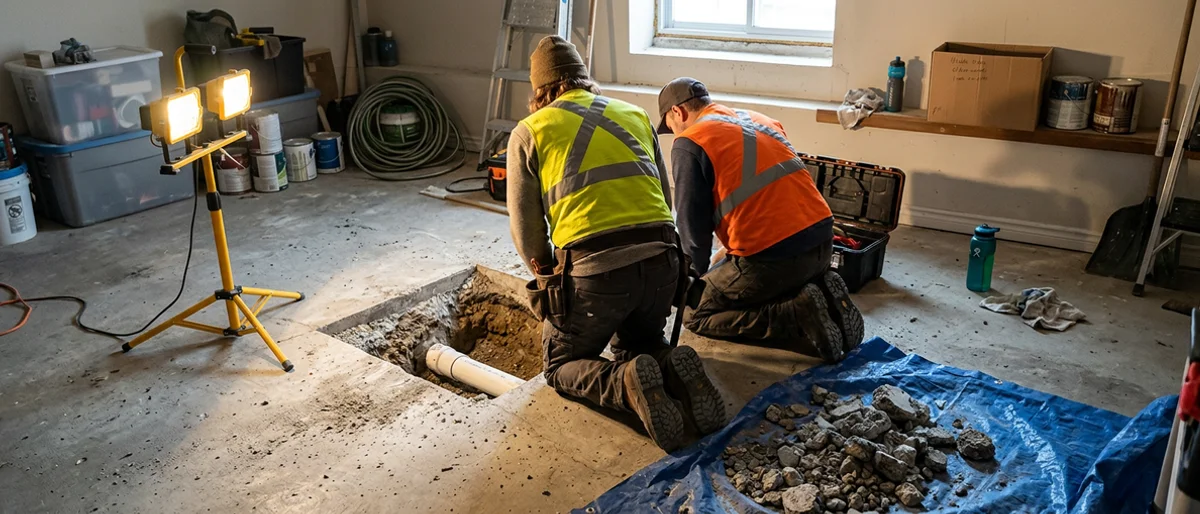
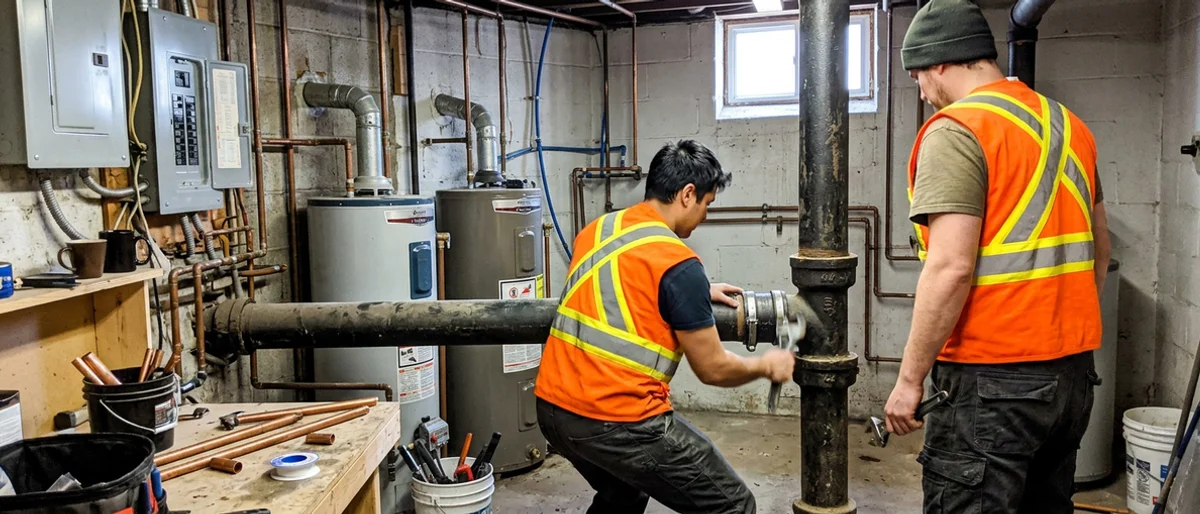
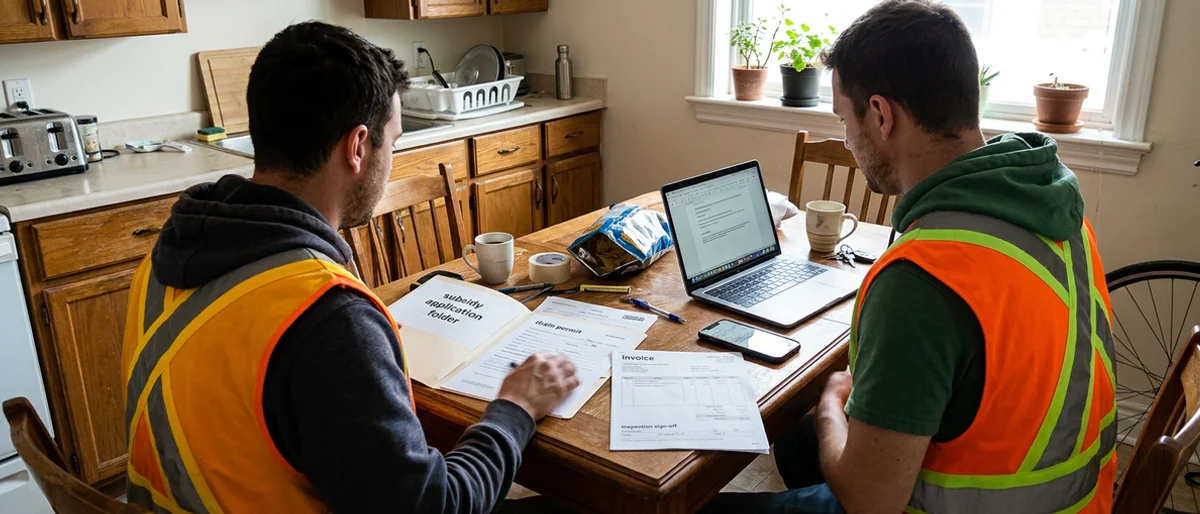
Group crew photos from real Toronto basements and property lines. Tap any photo to enlarge.
Customer Proof
What Customers Say About Our Exterior Install
★★★★★
"We have a finished basement with tile we did not want cut, so they dug at the property line instead. The sod is back down and you can barely tell where the trench was."
Angela F., Humber Valley
Exterior install $3,900 CAD
★★★★★
"Install was late November and they were straight with us about frost depth and backfill. They came by in April to check the settled soil and topped it up."
Rob D., West Hill
Exterior install $4,200 CAD
Clear Answers
Exterior Install FAQs
How much does an exterior backwater valve cost in Toronto?
$2,500-$4,500 CAD before the rebate. Depth, soil, and what has to be restored (sod, interlock or driveway) set the price. Up to $1,250 comes back through the City subsidy.
Can you install an exterior backwater valve in winter?
Sometimes, with ground thawing, but frozen soil adds time and cost. In deep winter we often recommend an interior install instead.
Do you restore the yard after digging?
Yes. Backfill is compacted in lifts, then sod, interlock or driveway surfaces are restored as part of the quote.
Do you install exterior valves on Etobicoke lakefront lots?
Yes. Low-lying lots in Mimico and Long Branch face the highest surge risk, and we account for the high water table and clay backfill there.
How long does an exterior install take?
One to two days on site, plus permit lead time. The trench stays open until the City inspector has seen the valve and our backflow test is complete.
How do I reach an exterior valve for maintenance?
Through the access cap at grade. The deep-burial riser runs straight down to the valve, so the annual check is done from the yard without digging.
Is an exterior valve more likely to freeze?
Not when it's installed below the 1.2-1.8 m frost line with a proper riser and grade collar. We add insulation board in exposed spots.
Will my lawn sink after the install?
It shouldn't. We compact clay backfill in lifts and come back after the first freeze-thaw season to check. If anything has settled, we top it up.
Is exterior better than interior?
Not usually. In our opinion interior is better for most homes because it's cheaper and easier to service. Exterior is the right call for deep laterals and floors that can't be cut.
Still have a question?
A licensed plumber can answer it on the phone or at your free assessment.